

The Vibe Coding Slot Machine
The House Always Wins Unless You Change How You Play the Game.


I've recently been thinking about this "vibe coding slot machine" concept. Are we just gambling with our code? I was especially inspired by this article and this image:
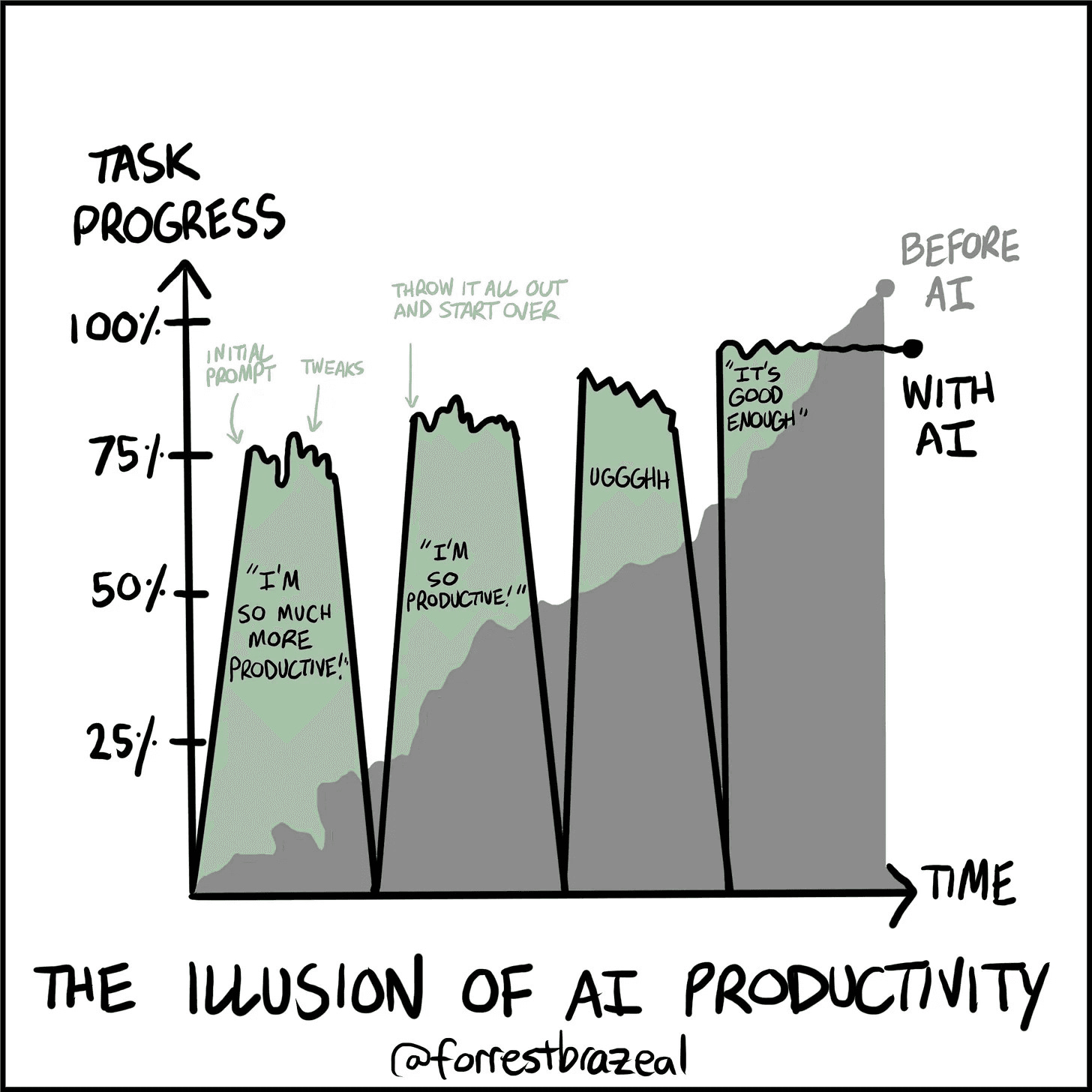
So let’s imagine stepping up to your choice vibe coding tool like it’s a Vegas slot machine.
You put in your prompt (the coin), pull the lever (hit enter), and wait to see if you’ve hit the jackpot (a clean, working, insightful code snippet) . . . or not.
The Jackpot!
Sometimes, the result is magical:
It generates the exact regex you need.
Refactors your code you’ve been struggling with and it just works.
Gives you a solid architecture suggestion you might have spent hours debating.
It feels like you’re cheating time. You’re hooked. Enter the 10x developer.
The Miss
But there are other times:
The code is subtly broken, and it takes you longer to debug than if you’d written it yourself.
It invents functions, misreads the problem, or gaslights you with confident nonsense.
It just…stalls. A blank spin.
You are the one that pays the price in time, trust, or cognitive load.
The Slot Machine Explained
Random Reinforcement: Like gambling, the intermittent rewards keep you coming back. AI hits just often enough to feel useful, and occasionally enough to feel like a genius.
Perceived Control: You think better prompts are better coins. Better slot pulls. Maybe they are. Maybe not. It adds a false sense of skill in what is often opaque probabilistic behaviour.
Addiction Loop: The dopamine from “it worked!” is real. Even if you know it won’t always work, you’re more likely to try again than to walk away.
Risk Transfer: You outsource part of your thinking and take on new risks. You might win time, but lose understanding or create technical debt.
The AI slot machine is powerful. But like any game of chance, the house always wins unless you understand the machine, use it with intention, and know when to walk away.
Moving From Gambler to Architect
Here’s the truth, the problem isn’t the tool. The problem is how we use it.
If you treat AI like a slot machine, you’ll get slot machine results.
But if you want consistent, high-quality output, you have to change the relationship.
Here’s how:
Stop asking for code. Start describing the problem. Not just “give me a Python function,” but “I need a function that groups items by category while handling edge cases like null values and nested keys.”
Think like a system designer, not a prompt gambler. Break the problem down. Feed it in chunks. Build feedback loops into your workflow.
Treat it like a junior developer with infinite patience. Don’t expect it to read your mind. Guide it. Ask clarifying questions. Test its work.
Use prompt templates, not vibes. Thoughtful input = predictable output. Don’t wing it. Structure your prompts like you structure your code.
Final Thought
AI isn’t magic. It’s not a slot machine, and it’s not a genius.
It’s a pattern engine. It reflects the structure you give it.
It mirrors your clarity or your confusion.
So stop pumping coins in the slot machine and start designing the system where you have the advantage.